

AI Voice Analysis Spots Hidden Concussions at a Client's First Intake Call
NeuroLexIQ and Canary Speech launch the first objective tool to catch brain injuries early — when it matters most for personal injury clients
| What it does: | Analyzes speech patterns during a structured intake call to flag potential concussion |
| When it's used: | At first client contact — before any doctor's exam |
| What the output is: | The CPR flags potential injury; paired qEEG testing collects and preserves FDA-cleared neurodiagnostic data — making the full report litigation-ready |
| How to access: | Contact NeuroLexIQ to join the May 1 pilot — see details below |
Knoxville, TN — April 21, 2026
Every year, thousands of people walk away from car crashes and falls with concussions that go unseen for weeks or months. Symptoms hide. Evidence fades. And clients lose the chance to prove what happened.
That changes today.
NeuroLexIQ, The Brain Injury Authority, has partnered with Canary Speech, a global leader in AI-powered voice biomarkers, to introduce the NeuroLexIQ–Canary CPR (Concussion Probability Report). This client-first platform analyzes subtle patterns in a person's voice during a structured intake conversation — identifying potential brain injury early enough to initiate qEEG validation and lock in the evidentiary chain before symptoms fade and causation becomes harder to prove.
A Breakthrough Built on Proven Technology
Canary Speech's AI has earned worldwide recognition for detecting cognitive and behavioral changes through everyday speech. Its technology analyzes natural speech patterns during a structured intake conversation, turning a simple client call into a clinical-grade evaluation — producing real data about an invisible injury at the precise moment a client first reaches out for help. For personal injury attorneys, early objective documentation has been shown to strengthen demand lettersand reduce time-to-settlement. The CPR makes that possible from day one.
Validation Pilot Launches May 1
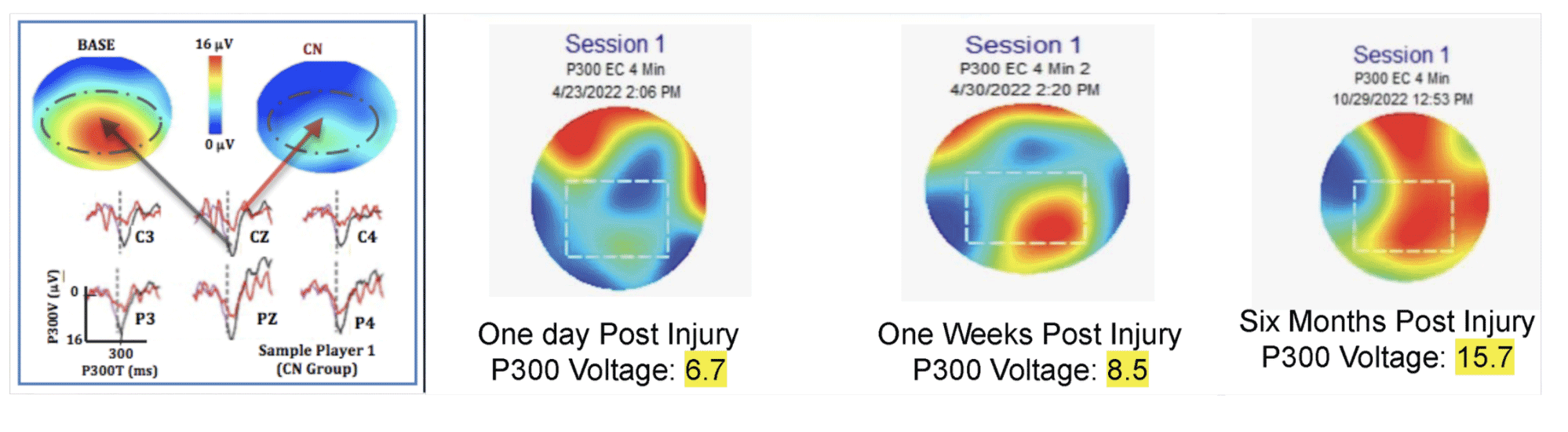
Starting May 1, NeuroLexIQ and Canary Speech will run a structured validation pilot. Client voice data from the CPR will be compared directly against qEEG brain mapping — a recognized neurodiagnostic standard of care. The pilot is designed to produce peer-reviewed validation data supporting admissibility under Daubert and Frye standards, delivering clear, defensible medical evidence that stands up in records, negotiations, and court.
Clients who move forward receive full access to qEEG testing, board-certified neurotrauma interpretation, medical record review, and causation analysis — every step grounded in objective science.


